Sunday, 21 November 2010

Traditional Crafts by Kathleen French (H.E. Assignment)


Firstly there is lace. Irish lace was very much in demand in early days. Lace was handcrafted by grandparents, mothers and daughters. They worked by candlelight or gaslight. This would bring in extra money.

Then you had the Aran jumpers. Aran knitwear was very much in demand for export to America. Factories would export Aran knitware and employ women in their homes to knit for them. This would bring in extra money.

Women were very skilled in tradition and in all kinds of different skills. In early days this is how people earned their living. In later years Factories were set up. This done away with most of the work at home. Still today there are some women who work from home, and the Aran sweater is still pretty much in demand.

The young today don't have the skills to teach, and our traditions are fading away. We have a new women's group in Lifford in which we are doing all these crafts.

This is cultural history.

William Burke 1792 - 1829 by Carmel Parkes (H.E. Assignment)

William Burke was born in Urney near Strabane in 1792. After trying his hand at a variety of trades, and serving as an officer's servant in the Donegal militia, he left his wife and children and went to Scotland around 1817, working as a navvy for the Union Canal. There he met Helen McDougal and they lived as man and wife. They traveled around the country and eventually ended up in Edinburgh and found lodgings at Tanners close at a lodging house run by Margaret Hare. Her husband was called William and he came from Ulster. They soon all became friends.

This was the start of the infamous partnership between Burke and Hare. In December 1827 a lodger died in the house, owing £4 to Hare. He mentioned this to Burke who said he could get money from a doctor for the body.

Over the next nine months, sixteen people were murdered and their bodies sold to a Dr Knox, an Edinburgh surgeon, at £7 each. Today that would be around £600 each.

However they got careless when they murdered Mrs Docherty, a recent arrival from Edinburgh and also from Ireland, whom Burke had befriended and offered her breakfast at his lodgings. Later on that day Burke had asked fellow lodgers Mr and Mrs Gray to move out and stay elsewhere at his expense. The following morning however, Mr and Mrs Gray returned to the lodgings asking for Mrs Docherty as they were suspicious of the goings on at the lodging house.

They found Docherty's body under a straw mattress that Burke had told them to stay away from and even after a large bribe of £10 from McDougal to keep quiet, they reported the matter to the police, and Burke and Hare were caught.

The Trial

On Monday November 3rd 1828 Edinburgh awoke to the horrifying news that the most atrocious murders of the century had been committed in the West Port district of the town. William Burke and William Hare together with Helen McDougal and Margaret Hare, were accused of killing sixteen people over the course of twelve months in order to sell their cadavers as subjects for dissection.

Burke, McDougal, William and Margaret Hare were arrested for Docherty's murder. William and Margaret Hare turned Kings witnesses (witnesses for the prosecution) in return for immunity. Burke and McDougal were tried for the murder on December 24th 1828. McDougal was acquitted with the Scots verdict (not proven). Burke was convicted and sentenced to death. He was executed on January 28th 1829.

His body was displayed to the public before being handed over to the doctors to be dissected. His skeleton, death masks and items made from his tanned skin are displayed at Edinburgh Medical College museum. Hare was allowed to travel to England where he disappeared and was never heard of again.

This is an example of social and legal history.

Friday, 19 November 2010

Sir Edward Carson and the Ulster Volunteers - Sharon Clarke (Historical Elements Assignment)


The origins of the Ulster Volunteers are to be found in the great controversy over the Home Rule Bills of 1912-1914. Most of Donegal county were Home Rulers, but there was a strong 'Planter' element, particularly in the Laggan and along Donegal Bay, which regarded the maintenance of the Union as essential to its civil and religious liberty and to its economic prosperity.

The 1911 census showed that 21.5% of Co. Donegal's population was Protestant. However, the county's Protestant population was heavily concentrated in the East of Donegal. The signing of the Ulster Covenant and the Women's declaration of the 28th September 1912 showed that in East Donegal 4,187 men signed the Covenant. In May 1913 there were six Unionist Clubs in Donegal, in July 1913 the number had risen to nineteen, in four which training was taking place with dummy rifles. By September 1913 there were seventeen Ulster Unionists' clubs in the County. In most of them members were practicing drill and parading public roads carrying dummy rifles. The Royal Irish Constabulary believed that the strength of the UVF in the county in September 1913 to be 1,178 of whom 890 were concentrated around Raphoe.

On Thursday 2nd October 1913 Sir Edward Carson, accompanied by the Duke of Abercorn, travelled to Strabane by train, having been guests for the night of the Earl and Countess of Ranfurly. A large crowd greeted Carson at Strabane railway station. Carson completed his journey to Raphoe by motorcar. C.V. Stoney of Oakfield entertained Carson and his part in his home, originally the Deanery, a Georgian house built in 1739 at a cost of £1,680. Here a platform draped with brightly coloured bunting was erected. The village was fraped in Union Jacks and as early as 8.00am, people began converging on the area. The Unionist demonstration took place in the Oakfield demense. Carson reviewed 1,500 volunteers, under the command of the Earl of Leitrim. Contingents were drawn from all over the county, speaker after speaker assured the crowd that the success of their cause was guaranteed. The Earl of Leitrim alone insisted that their quarrel was not 'with our Roman Catholic neighbours, but with the government.' E.C. Herdman of Sion Mills and C.V. Stoney also spoke. The Raphoe meeting was part of Carson's fortnight long tour to mark the first anniversary of the signing of the Ulster Convenant. But these promises were never put to the test for war Swept Europe and the Home Rule issue was shelved.

When World War 1 broke out in 1914, Carson pledged his volunteers to the war effort. They became the 11th battalion of the Inniskillings, with Lord Leitrim as their major. In 1916 they were sent to Aldershot, en route for France. In 1916 they were heavily engaged in the fighting, and many Donegal families mourned the dead or anxiously awaited news of the wounded. For many families in Donegal, particularly in the east and south of the county, 1916 was the year of the Somme. That terrible battle, which began on July 1st, and continued for many days, took a heavy toll on the Ulster Division. The volunteers of West Ulster formed battalions of the Royal Inniskilling fusiliers. Donegal was the 11th battalion, Tyrone the 9th and Derry the 10th. Throughout July and August 1916 the local papers carried lengthening lists of casualties among the Inniskillings, and after a number of names came the words 'Donegal Volunteers.'

Between November and the summer of 1914 Carson's task was to save as much of Ulster as possible from the operation of a Home Rule Bill. At a Buckingham palace conference, on the eve of World War 1, it seemed as if only Antrim, Down and Londonderry could be saved for the Union, which left Donegal under the control of Dublin. To the horror of Donegal's Unionists, Carson and the other northerners accepted it. However, the settlement collapsed and it was not until February 1920 that the Government of Ireland Act was introduced into the Commons. Carson was invited to become Northern Ireland's first Prime Minister, but he declined as it would involved operating the Government of Ireland Act which he had viewed with distaste. In February 1921 he formally relinquished the leadership of Ulster Unionism. On May 21st Carson accepted a life peerage and judicial as Lord of appeal in Ordinary. Negotiations resulted in the Anglo-Irish treaty which brought the conflict to a close and gave Dominion status to the 26 counties. Carson regarded it as surrender to terrorism and humiliation for the British Empire. After that he took little interest in Ulster politics. He made occasional visits to parliament, and his statue was unveiled in front of Parliament Buildings in his presence on July 8th, 1933. Carson died on October 22nd 1935 at Cleve Court, near Ramsgate. HMS Broke conveyed the body to Belfast for a state funeral in St. Anne's Cathedral, where he was buried within the precincts. This subject relates to Political and Military history.

Swilly Valley Mills (Robert Smyth & Sons) - Hugh Doherty (Historical Elements Assignment)


I have chosen the history of Swilly Valley Mills because this had not been written by anyone else, to the best of my knowledge. I had recently retired from the mills after 42 years of service as a Sales Representative and a lot of information remains fresh in my mind.

Robert Smyth & Sons, Canal Basin Mills, Strabane, were established in 1865 and traded extensively with grain suppliers and customers in Co. Donegal.

Political division of the country and the establishment of a frontier (border) with Northern Ireland, controlled by Customs & Excise posts on each side of the border, meant that Smyth's had to set up another mill in Co. Donegal.

In 1926, they inaugurated Swilly Valley Mills at Ballindrait which operated on a seasonal basis (September to April) and employed six workmen. The workforce gradually expanded, over the years, to about eighty men. The mills were reliable purchasers of grain from local farmers and they encouraged progressive breeding of farm animals and poultry.

Elements of History

This topic refers to three elements of history; Political, Social and Economic.

Swilly Valley Mills were established as a result of political issues which prevented free movement of goods and services across they border.

From a social point of view many workers who might otherwise have emigrated were able to remain, marry and rear families in their local community. Some families would have two or three members working in the Mills and some of their children would follow in their fathers' footsteps.

On the economic side, increased farm mechanisation led to a surplus of farm laborers and many of these got employment at the Mills where they earned good wages. Farmers were paid market prices for their grain and other local suppliers of goods and services to the mills also benefited financially.

The Plantation of Ulster (1605-1625) - Tilly Hyndman (Historical Elements assignment)

King James I was responsible for the plantation of Ulster. As early as 1603, he had given lands in Co. Down to Scottish protestants. This prepared the way for the plantation of Armagh, Coleraine, Cavan, Donegal, Fermanagh and Tyrone, known as the Plantation of Ulster. Each portion in the plantation was given a parish in the established church, and was also to have a royal school for the education of young men, who it was hoped would go on to Trinity College Dublin to train as protestant ministers. The university was also given a grant of land to ensure economic viability.

The plantation brought many changes to Ulster. It resulted in increased population, which in turn meant the creation of new towns and villages, as well as schools and industries. The new settlers brought new surnames and customs to Ireland, and the protestant faith was greatly strengthened.

Apart from the obvious religious history aspect due to the establishment of the protestant religion in Ireland, this topic also demonstrates elements of social and economic history. The majority of new settlers lived in rural areas, and farming formed the mainstay of the plantation economy, much like rural Ireland today. They did however manage to build up towns, although growth was slow due to inadequate economic resources. As time went on, they began trading any extra produce they had, and eventually began importing and exporting goods.

The Flight of the Earls - Dolores O'Kelly (Historical Elements assignment)


The Causes of the Flight:

  • The nine years war had left Ulster bereft of leaders. Gaelic families such as the O'Donnells, the O'Neills and the Maguires were left impoverished and divided.
  • Tír Conaill (Donegal) and Tír Eoghan (Tyrone) had been ruled under Brehon Law. This was the law of the land that covered ownership of property, inheritance and contract as well as social status and the responsibilities of individuals.
  • Incidents such as the kidnap of Red Hugh O' Donnell, the increase of the English garrisons and sheriffs in Tír Conaill.
  • Anglo-Norman families, loyal to the crown, would not join O'Neill and O'Donnell to stem the incursions and claims to their lands by sheriffs.
  • Foreign aid was sought from Spain but only arrived in 1601 at Kinsale - a little too late. O'Neill and O'Donnell, although ill prepared, attacked the English forces who in turn routed them. The Irish then fled and the Spanish surrendered.
  • There was in-fighting amongst the O'Donnells after the battle and Red Hugh left for Spain.
  • O'Neill and Lord Mountjoy signed the Treaty of Mellifont in 1603, the Gaelic chieftains were granted a full pardon.
  • Queen Elizabeth died in 1603 and was succeeded by James I of Scotland. Times had now changed however. The O'Donnells leadership had altered and Hugh O'Neill saw the established Church and State claim some of his lands.
  • Infighting and the dependence on Spanish help led to the O'Neills, O'Donnells, Maguires and extended families totaling 99 people leaving Ireland in 1607. They were to travel to Spain but weather conditions forced them to the French coast and they landed at Quillebeuf.
  • Neither O'Donnell or O'Neill ever returned to Ireland.

Impact on Military History

The Irish with their Brehon Law system were not a match for the highly developed centralised administrative system of the English. There was no planning, resources or awareness of the common good in evidence in any of the undertakings of the native Irish in their dealings with the English. The following is a list of some of the influences, mostly negative, which contributed to the defeat and elimination of the old Gaelic way of life.

  1. The effects of the Nine Years War. 1594-1603.
  2. Clan system was based on power and influence e.g. O'Dohertys, Mc Sweeneys and O'Boyles supported O'Donnell of Tír Conaill.
  3. In 1541 Henry VIII introduced the scheme of 'surrender and re-grant.'
  4. English garrisons and sheriffs were symbols of power and control and these gradually confiscated more and more Gaelic lands.
  5. Kidnap of Red Hugh O'Donnell - distrust of the English.
  6. O'Neill was a skilled strategist and had a well organised army during the Nine Years War but he allowed O'Donnell to influence him at Kinsale.
  7. To take back the country O'Neill needed the support of Anglo Normans which was not forthcoming.
  8. The chieftains needed help and approached the Spanish -a Catholic country that had issues with the English.
  9. The inability of the Irish to prevent a united front against the English.

Impact on Social History

The Flight of the Earls had a devastating effect on every aspect of Irish life, the consequences of which we still experience today. The following are some of the issues:

  1. Ulster, the last area where Gaelic society flourished, was gone forever.
  2. The native population was leaderless.
  3. Brehon Law was gone forever.
  4. New arrivals were landing in Ulster and the land was planted with Servitors, undertakers and 'deserving Irish' (those who had changed sides during the Nine Years War).
  5. By 1608 the Irish had one quarter of the confiscated lands.
  6. The city of London guilds were granted lands on the banks of the Foyle.
  7. Protestant Church was granted lands formally owned by the Catholic Church.
  8. Catholics had to attend Protestant Church services.
  9. 6000 native Irish soldiers were deported.
  10. In the 1690s there was an influx of Scottish Presbyterians, later called Ulster Scots, who later became a majority population.
  11. Town growth expanded, and Ulster became part of a religious and social divide, which exists to this day.
  12. The minority native Irish living in Ulster became a part of a religious and social divide which exists to this day.
  13. The Good Friday Agreement in 1998 is endeavoring to bring peace to centuries of discord.

Tuesday, 9 November 2010

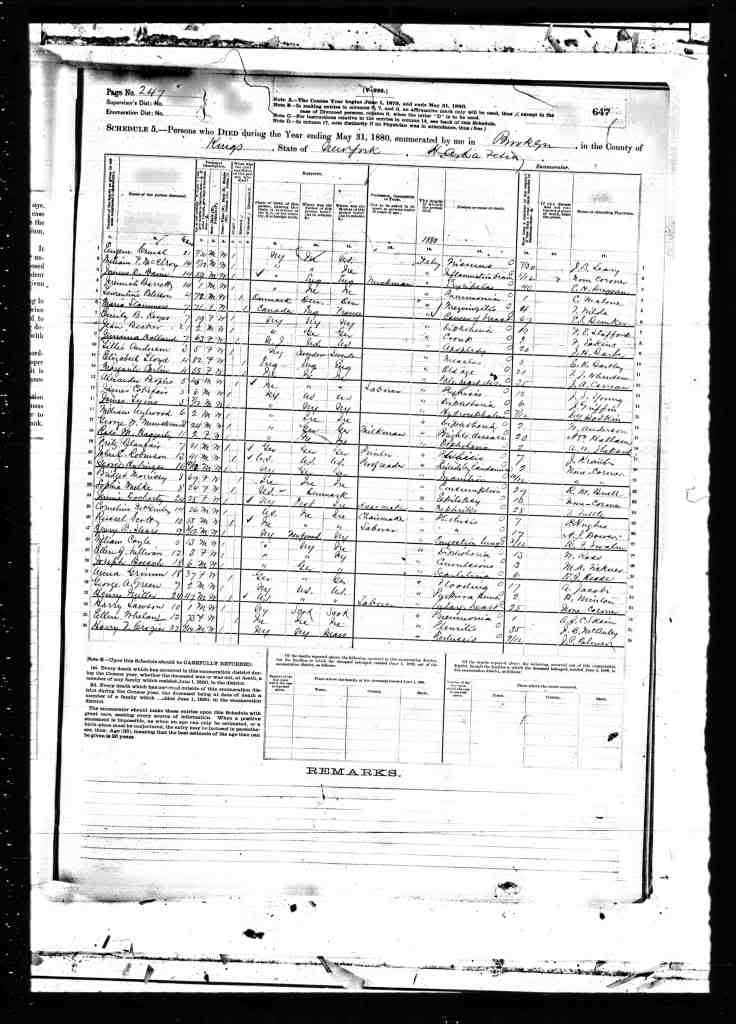
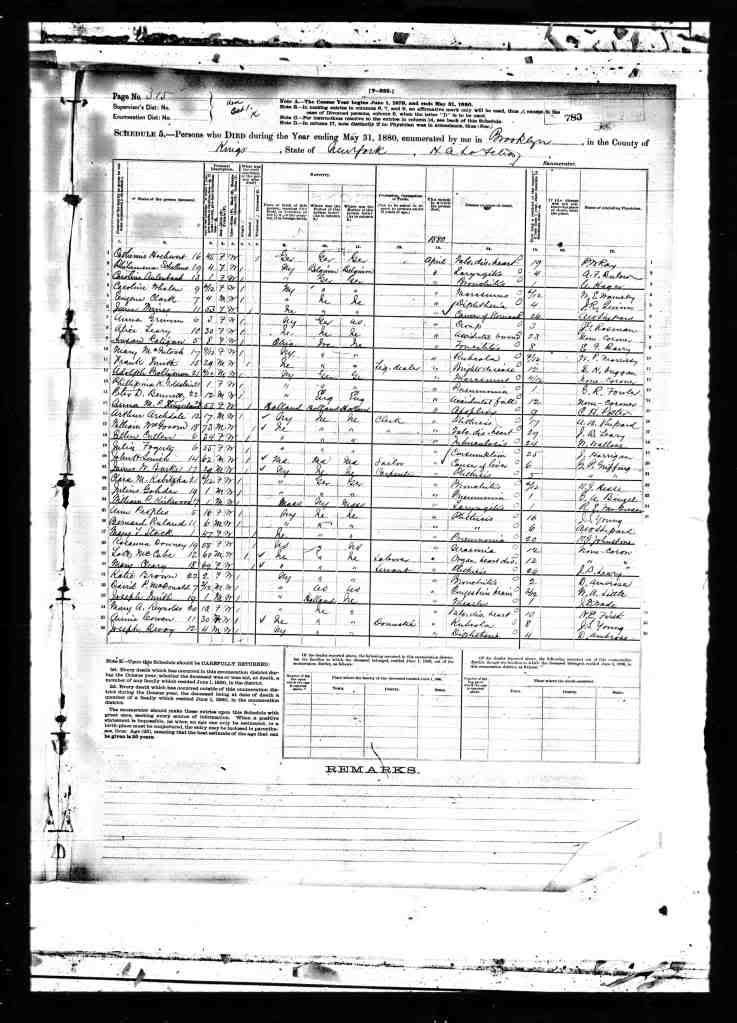
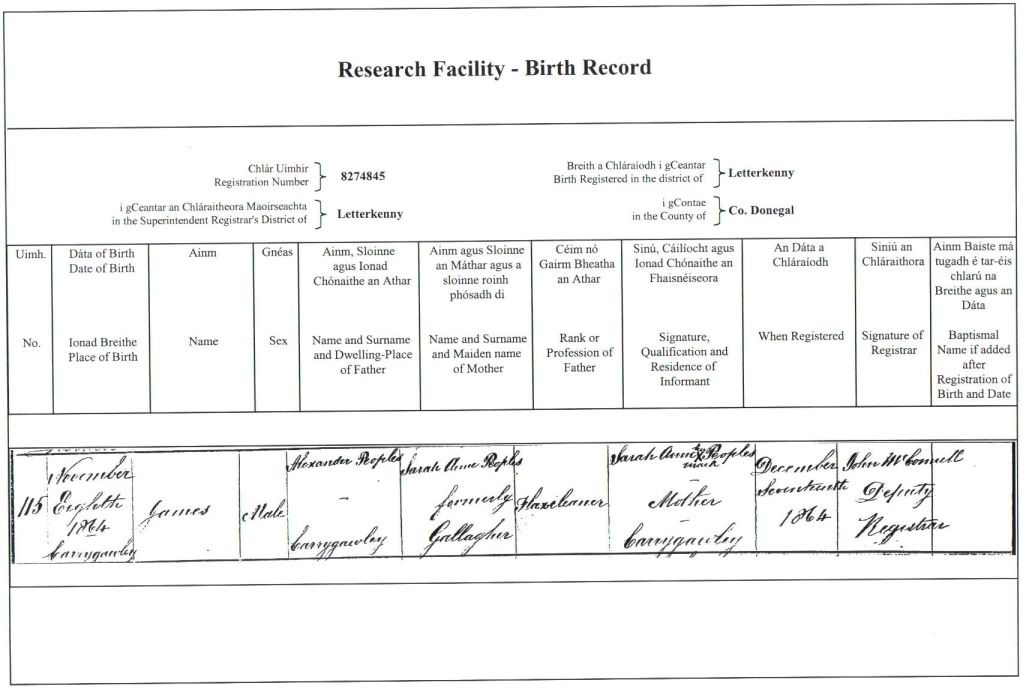
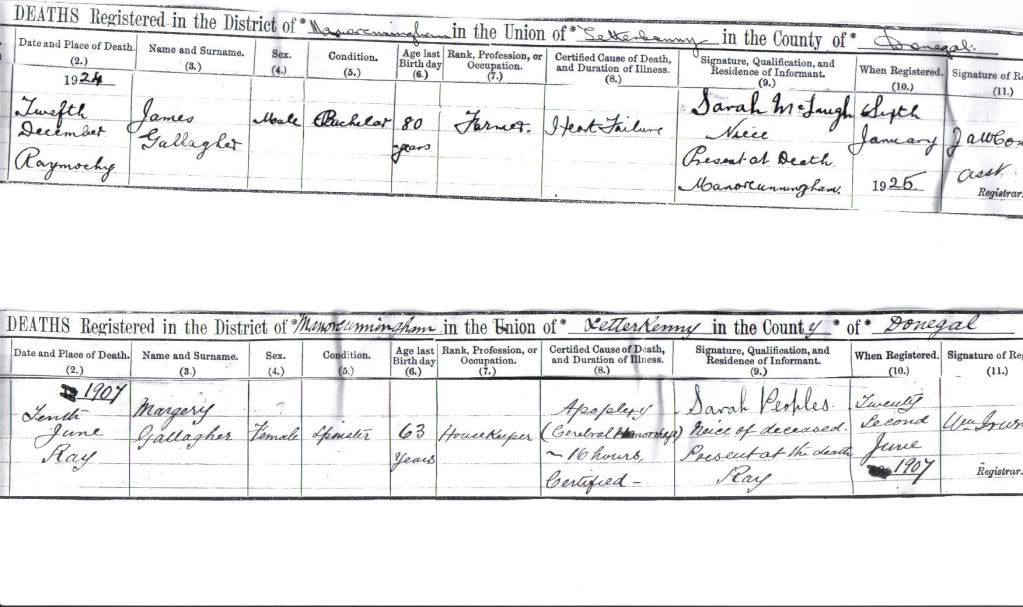
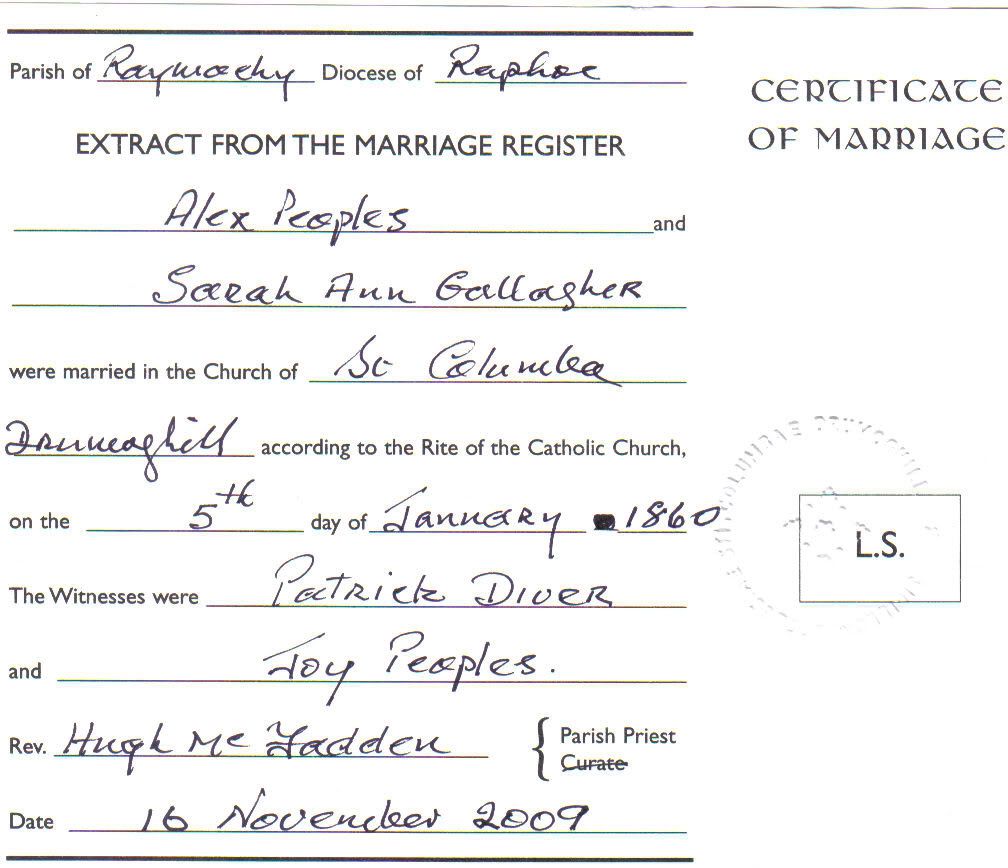
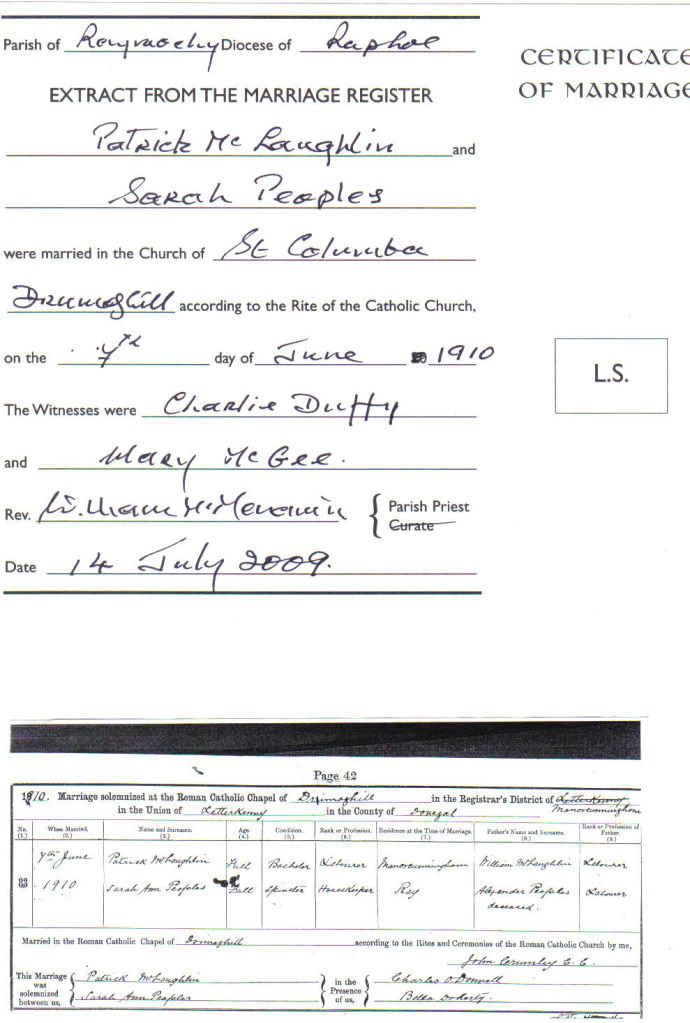
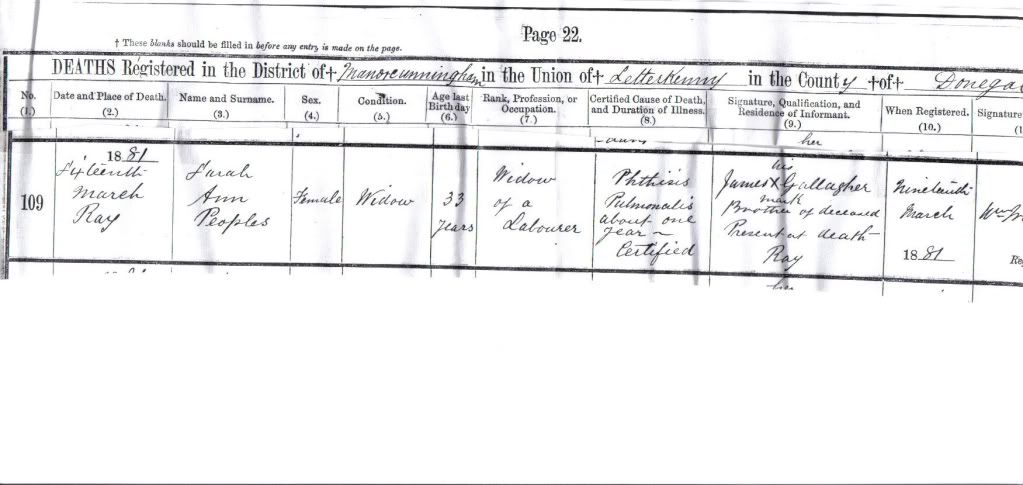
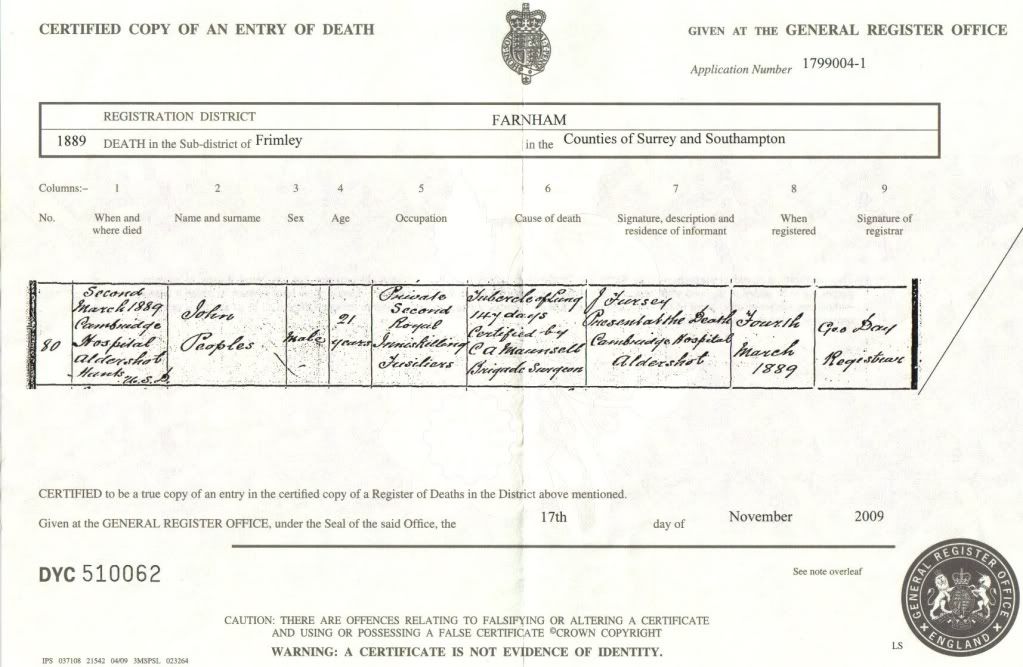
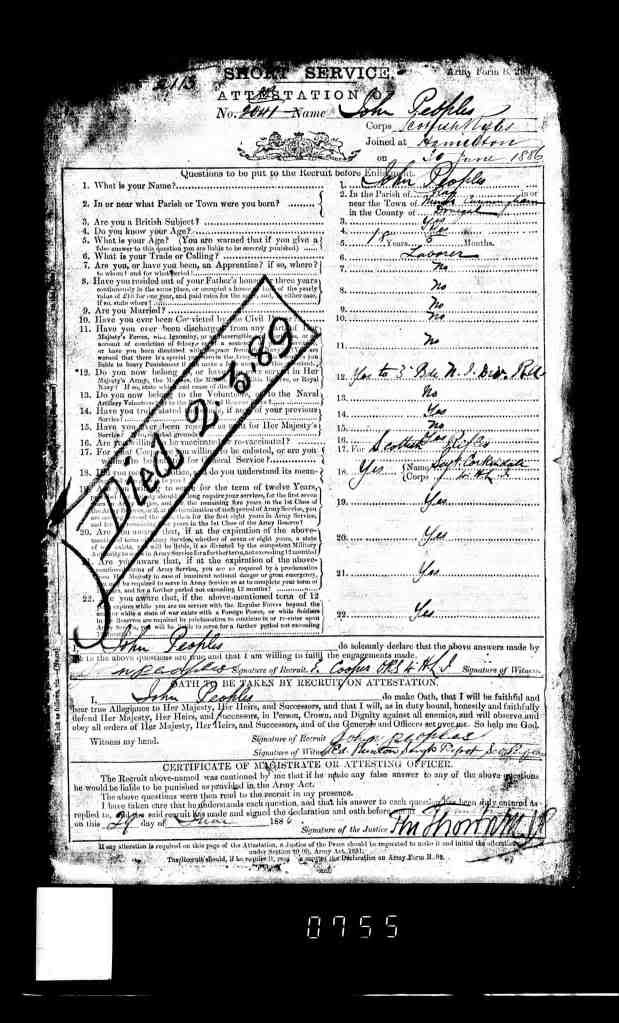
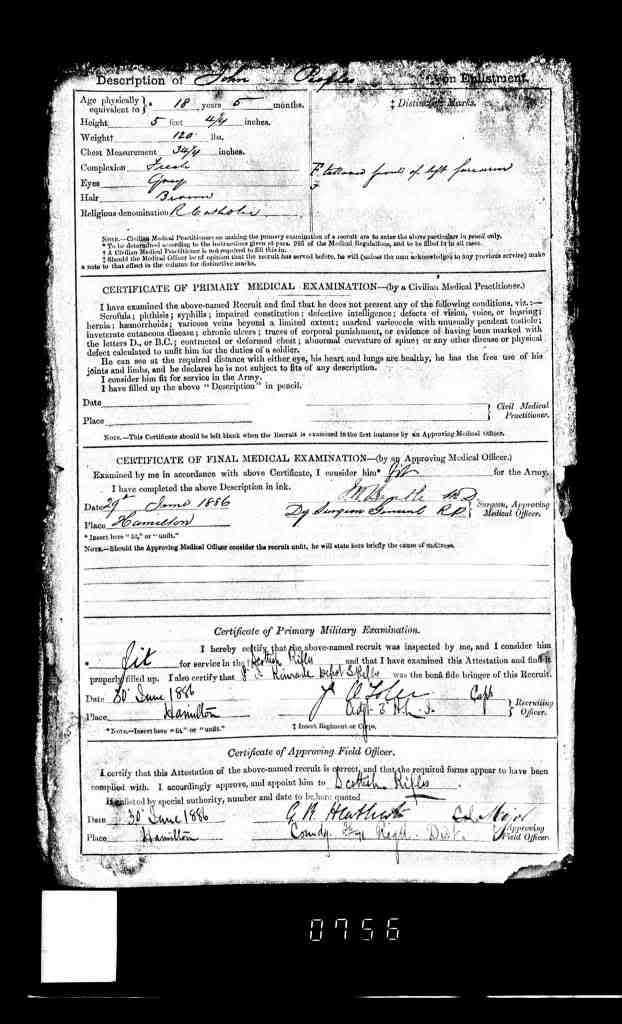
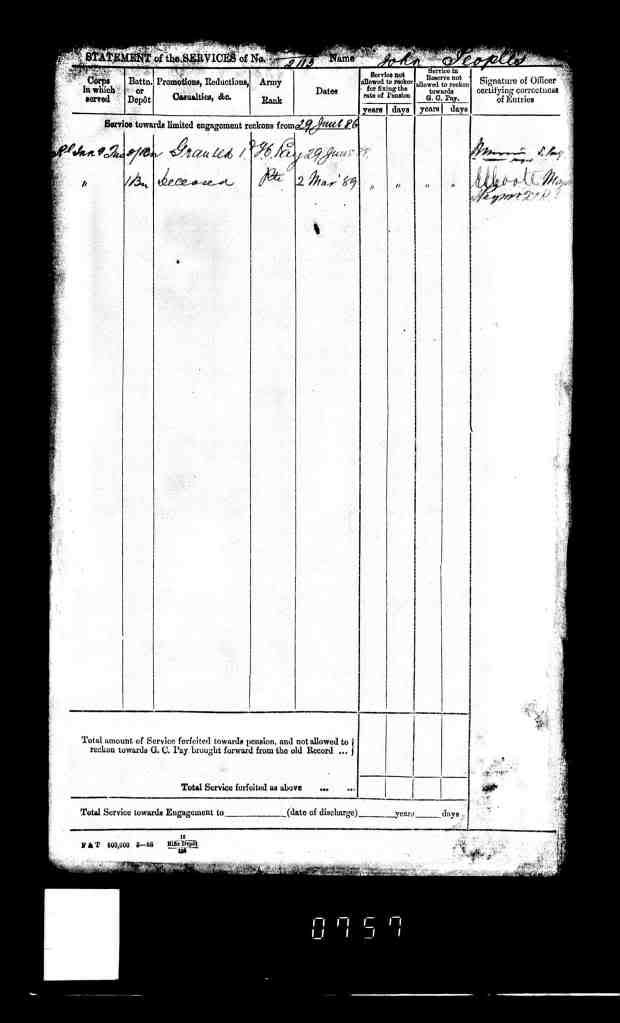
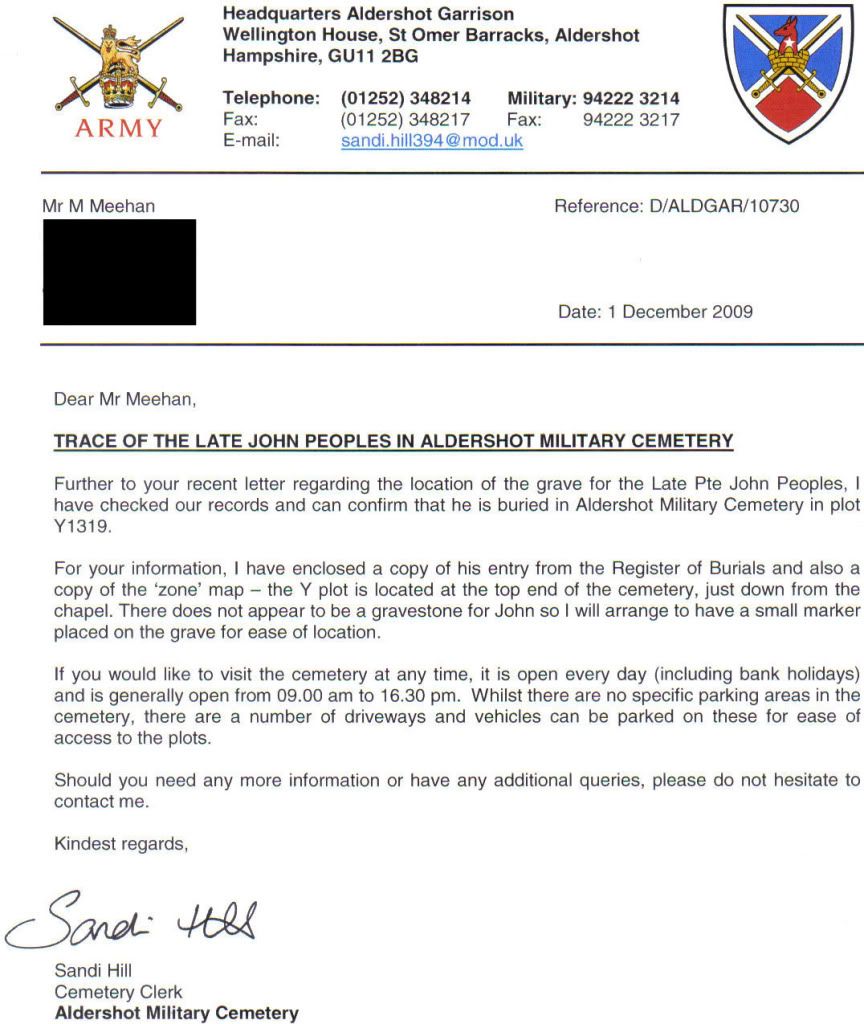
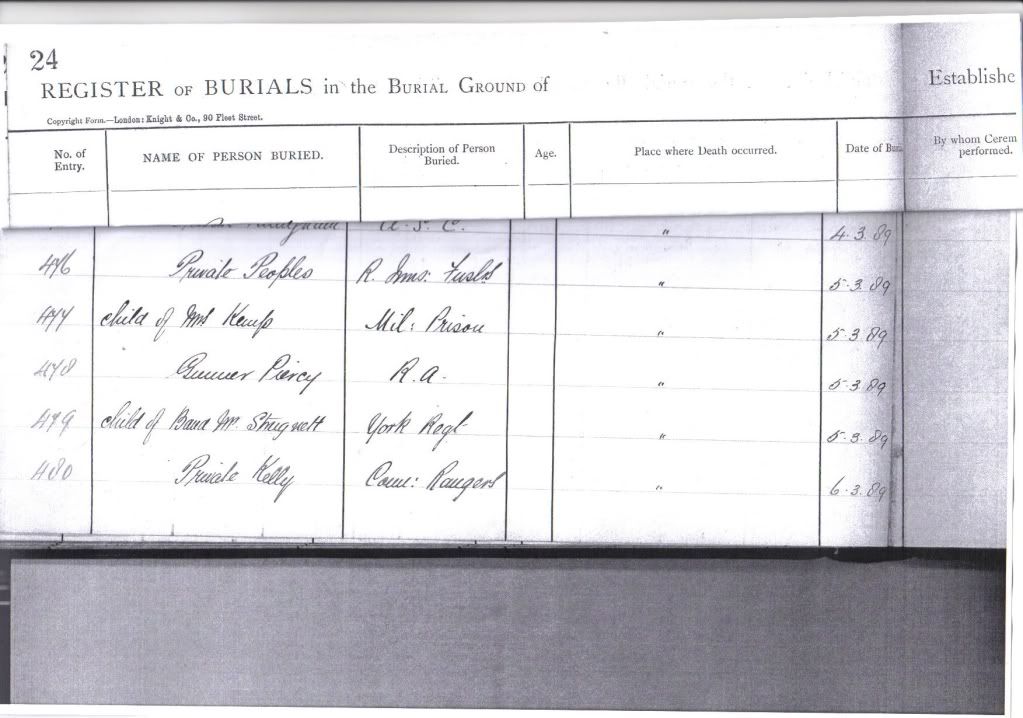
Michael Meehan - The Story of John Peoples

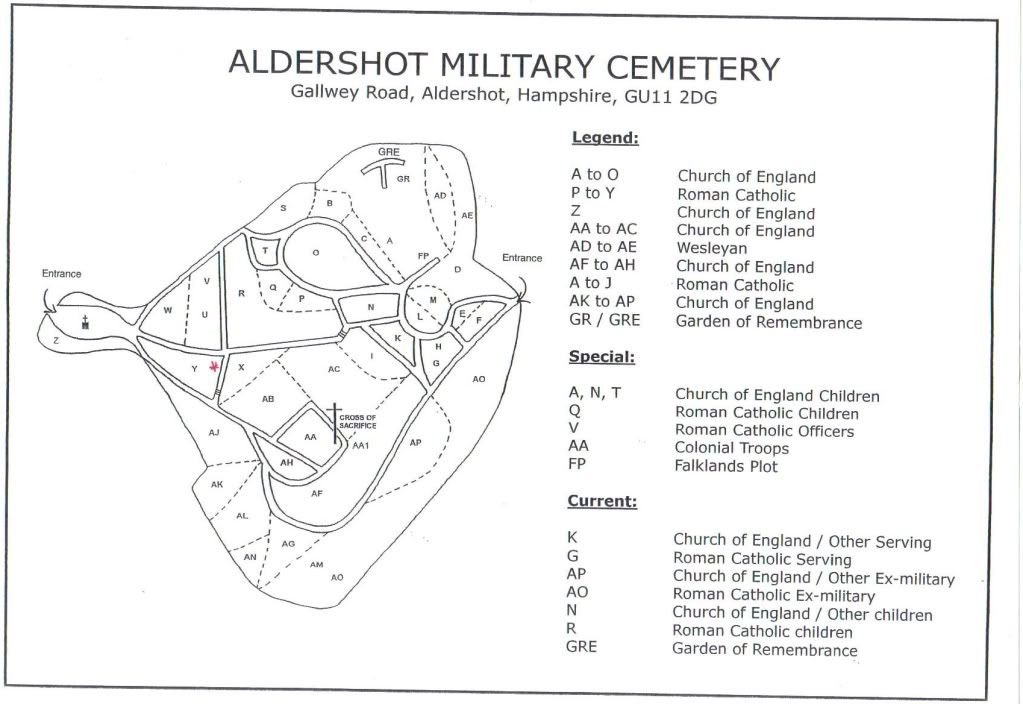
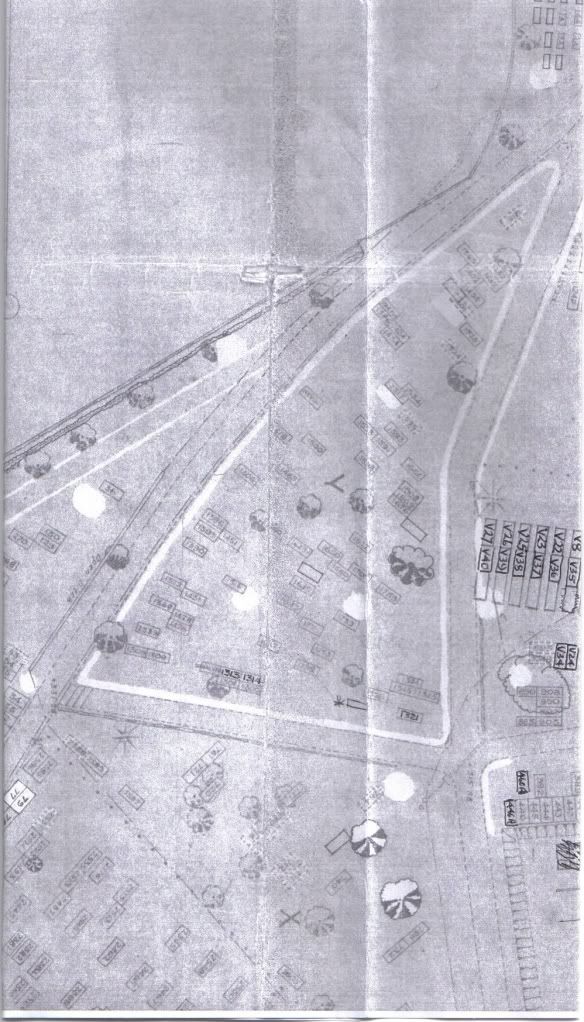
Michael Meehan is a member of the Raymochy hub in Co. Donegal. In this recording he talks about the search for the history and burial ground of his great granduncle, John Peoples.


Click the play button on the player below to hear Michael talking.


A complete transcription of Michael's speech can be read clicking here.

Michael also gathered up a series of documents during his research. Most of the documents mentioned in his recording can be viewed by clicking on the links below: