When my ancestors first came to live in the Glebe the horse played a big part in their lives and to this day it is the horse that is very important in my life.
In the early 1800's and 1900's they were used to cultivate the ground by pulling a plough, turning the soil so seeds for a crop could be planted and later when the crop developed the horse would pull machinery used to harvest the crop. The horse delivered milk around Glebe and Sion Mills. They were shire or draft bred and as far as I know there were always three hardworking, faithful horses on the farm. In the 1940's the tractor was introduced which overtook the horse and by the middle of the 1950's the horse was not needed. My father still kept a horse only to breed from as he could sell the foals.
I also grew up with horses and started to ride when I was two and my daughter (who is now 20) has also been riding since she was two. My son also bought a thoroughbred mare to breed from.
The horse is very important in agricultural and social history. Throughout the years we can see how the horse was so important to the farming industry, but now the horse is mainly used for leisure purposes although there is still money to be made e.g. training racehorses, showjumping etc. Many people are now turning to these sports and there is a steady increase in sport with horses.
Showing posts with label Tyrone. Show all posts
Showing posts with label Tyrone. Show all posts
Monday, 29 November 2010

Monday, 22 November 2010
St. John's Parish Church - Dunnalong by Amanda Buchanan

In the early 1830s due to the growing church of Ireland community and the lack of transportation the need for a local church was a major issue in the lower Donagheady area. During 1832 the Marquis of Abercorn granted an acre of ground for a church to be built in the townland of Drumgauty. It was not until the 1860s that a decision was made to create the perpetual curacy of Dunnalong. The Church of St. John was built in 1865 on a plot of land formerly leased by James McGettigan. The cost of building the church was covered by a grant from the Ecclesiastical Commissioners and by public subscription. It was designed by architects Welland and Gillespie.
The Church with its steeply pitched roof is an unmissable landmark on the main road between Derry and Strabane. The stones used for the building of the Church were acquired from the local slate quarry in the adjoining town-land of Solus.
The first curate was Frederick James Clark who had been curate of Donagheady. Following the retirement of the Rev. Thomas Sutcliffe in 1921 the curacy was in the care of Camus-Juxtra-Mourne until 1926. During 1926 the Rev. William Rennison retired from the parish of Leckpatrick and as a result of this the parishes of Leckpatrick and Dunnalong were united. Their first rector being Rev. Thomas Alexander Hickson Moriarty.
Lady Elizabeth Hamilton - Reene Donaghy
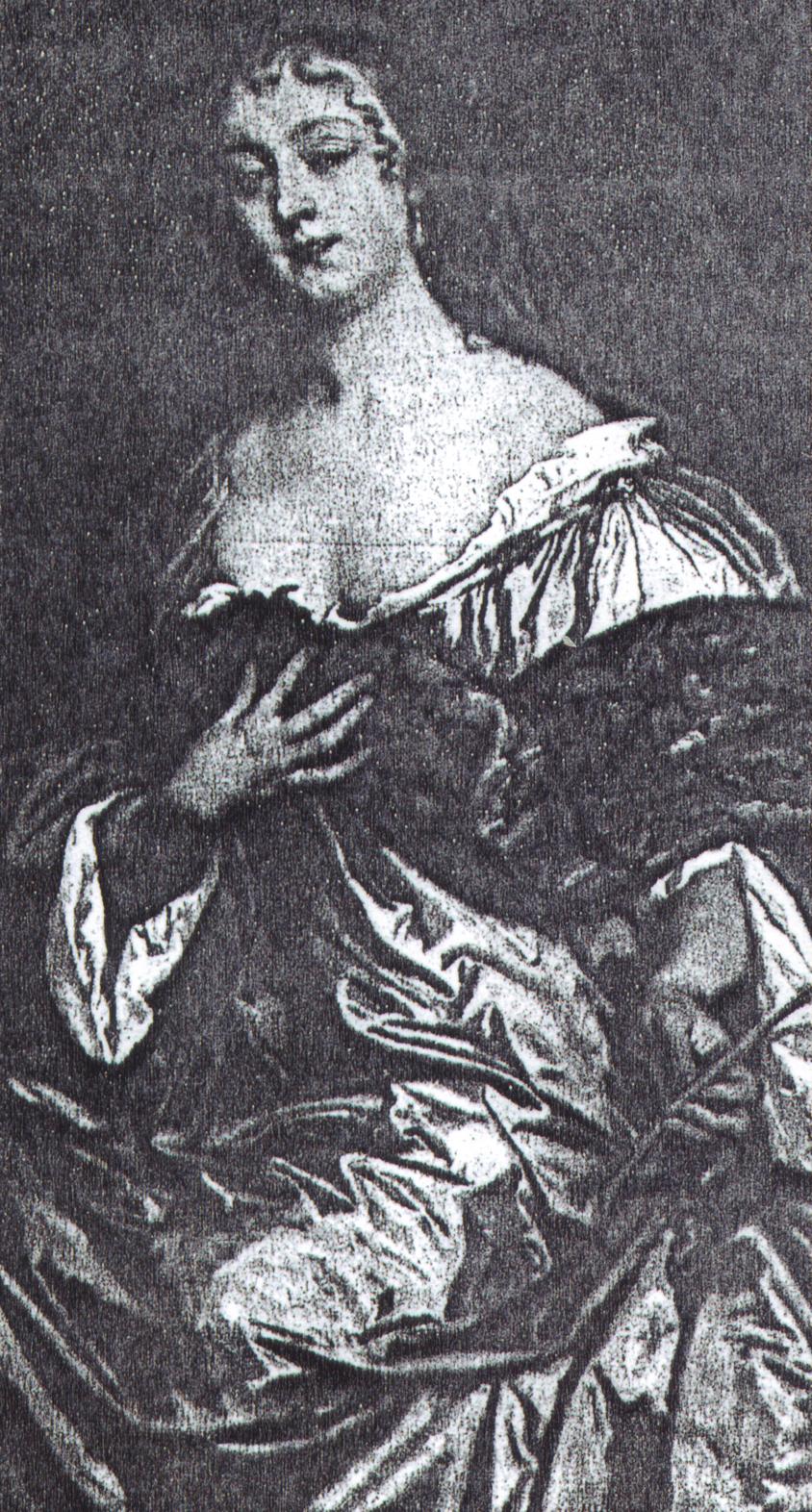
She was born at Mountcastle, eldest daughter of Sir George Hamilton, fourth son of the first Earl of Abercorn, and his wife Mary who was the daughter of Thomas Butler Viscount Thurles.
At the court of Charles II, Elizabeth was reported to be both beautiful and witty earning the title 'La Belle Hamilton'.
The court painter Lely painted her portrait many times and National Portrait Gallery online records nine images of her in its collection.
Popular with the king, she refused marriage to the Dukes of Redmond, Norfolk and Tyrconnell, but a eventually married the Comte de Philibert Gramont in 1662 apparently after he was put under pressure by her two brothers. He had been exiled to the London Court by Louis XIV for paying too much attention to one of the king's mistresses.
After marriage, Elizabeth went to Paris where she became Dame du Palais to Queen Maria Theresa of France.
Elizabeth had two daughters, Claude Charlotte who married the Earl of Stafford and Marie Elizabeth she became Abbess of Sainte Marie de Puissey in Lorraine.
St. Patricks Well - Magherakeel by Sara Moss

Situated approximately two miles form the village of Killeter is St. Patrick's Well, Magherakeel in the parish of Aghyaran (Termonamongan) Co. Tyrone. The parish has three holy wells; St. Patick's Well (Tober Phadraig), St. Davog's in Croighdenis and Fr. Mc Louighlins Meenard in Slievedoo.
The most popular and well known of these is St. Patricks well in Magherakeel. Some people think these wells were blessed by early saints and therefore continued to be a place of devotion. This well was blessed by St. Patrick himself and legend has it that he stopped here to rest and quench his thirst on his way from Lenten Sacrifice in Lough Derg.
On the 17th March every year bands parade to the well before rosary is recited at 3pm to a large crowd of people. This is a very important date in the parish calendar. Throughout the year people make visits here in search for cures and holy water for the sick. It is very well maintained and a 'must see' for those that have not yet paid it a visit.
Elements of History
Writing about St. Patricks Well can take in different elements of history, Religious, Architectural and Social. With the religious element it is a place visited by St. Patrick himself, and has an annual gathering on 17th March for the rosary as well as daily visits by people looking for cures and have great beliefs that their sickness or disease can be cured or relieved for whatever length of time.
The Architectural structure of the well has been carried out many, many years ago but in recent times has had a rebuild to give it a more modern look. Railings have been replaced by a stone built wall as well as the statue being erected into the stone wall, the well itself has a stone arch over it opposed to the open design. This would be for safety reasons and to keep the water clean. It still plays a big part in the social life for local people, as on a regular basis people call and get a great sense of quietness and calm to reflect on their faith and pray for whatever reason.
The Architectural structure of the well has been carried out many, many years ago but in recent times has had a rebuild to give it a more modern look. Railings have been replaced by a stone built wall as well as the statue being erected into the stone wall, the well itself has a stone arch over it opposed to the open design. This would be for safety reasons and to keep the water clean. It still plays a big part in the social life for local people, as on a regular basis people call and get a great sense of quietness and calm to reflect on their faith and pray for whatever reason.
Subscribe to:
Posts (Atom)